

Temporary Resident Permit vs. Visitor Record: Which Document Do You Need?
A Temporary Resident Permit (TRP) serves one specific purpose in Canada’s immigration system: allowing entry to individuals who are otherwise inadmissible to the country. If you’re researching TRPs, you’re likely facing criminal inadmissibility, medical concerns, or other barriers that prevent standard visitor status. Perhaps you’ve already been denied entry, or maybe you’re proactively planning because you know your record creates complications.
Here’s what separates a TRP from other temporary status documents: while visitor visas, study permits, and work permits are standard pathways for eligible applicants, a TRP is an exception granted when someone doesn’t meet regular entry requirements but has compelling reasons to enter Canada anyway. Think of it as a ministerial override that acknowledges your inadmissibility while determining that your need to enter outweighs any risk to Canadian society.
Consider Maria’s situation in 2025. A sustainability consultant from Brazil, she received an invitation to speak at a major environmental conference in Vancouver. The problem? A decade-old DUI conviction made her inadmissible to Canada. A standard visitor visa wasn’t an option. She needed a TRP, and she needed to demonstrate that her conference participation, the knowledge transfer she’d facilitate, and the international collaborations that might result justified granting her temporary access despite her criminal record.
This distinction matters because confusion between TRPs and similar documents, particularly Visitor Records (which extend stays for people already in Canada legally), causes countless applications to go down the wrong path entirely. Understanding which document you actually need, what evidence strengthens your case, and how immigration officers evaluate compelling reasons against inadmissibility concerns will determine whether your application succeeds or wastes months heading toward inevitable rejection.
Understanding Temporary Resident Permits: When Admissibility is the Issue
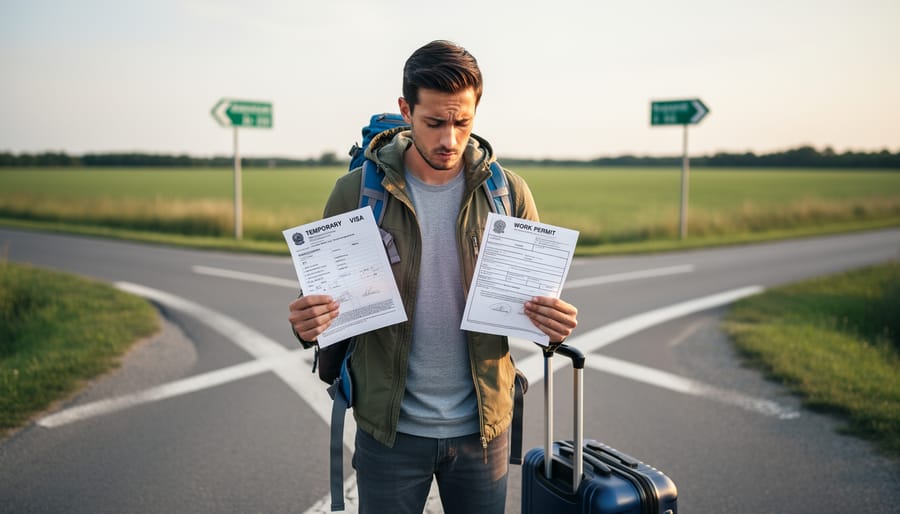
What Makes Someone Inadmissible?
Canada bars entry to individuals who pose risks to security, public health, or the integrity of the immigration system. Criminal inadmissibility is among the most common barriers, even a single DUI conviction can prevent you from crossing the border. Serious criminality (offences punishable by ten years or more) creates a significant obstacle, but less severe offences still trigger inadmissibility until you’ve completed your sentence and a sufficient period has passed.
Health-related grounds affect people with conditions that might endanger public health or place excessive demand on Canada’s healthcare system. Immigration officers assess whether your medical situation creates genuine risks, though these determinations consider individual circumstances rather than blanket exclusions.
Misrepresentation, providing false information or withholding relevant facts on previous applications, carries serious consequences. This can include anything from incorrect travel history to concealing past visa refusals. Even unintentional errors sometimes create barriers, though the impact depends on the nature of the omission.
Financial inadmissibility applies when officers believe you can’t support yourself during your stay, while security concerns cover involvement with organizations or activities threatening Canada’s safety. Lesser-known issues include entry risks like Delta-8 and other substances legal elsewhere but restricted here.
A TRP doesn’t erase inadmissibility; it acknowledges the barrier exists but permits temporary entry anyway when your reasons for visiting outweigh the concern. Officers weigh your situation against Canada’s interests, granting access for specific periods when justified.
Real-World Scenarios: Who Actually Needs a TRP?
Maria sat at her kitchen table in São Paulo, staring at the job offer from a Vancouver-based renewable energy firm. The position, designing solar arrays for remote Indigenous communities, was exactly what she’d trained for. But there was a problem: eight years earlier, she’d made a mistake. A DUI conviction from her early twenties meant she was inadmissible to Canada under criminal grounds. This is when she needed a temporary resident permit.
Unlike visitors simply extending their stays, Maria faced an admissibility barrier. The company wanted her expertise in sustainable infrastructure development, and her work would directly support Canada’s climate goals in underserved communities. She applied for a TRP, explaining how her specialized skills would serve Canadian interests. She included rehabilitation evidence, character references from her current employer, and documentation of the pressing need for her expertise on the northern solar project. Six months later, she received approval for a one-year TRP to work on the initiative.
Consider another scenario: James needed to attend his sister’s wedding in Toronto, but a decade-old fraud charge from his university days made him inadmissible. The wedding represented a rare family gathering, his aging parents flying from Ireland, siblings converging from three continents. He applied for a single-entry TRP for compassionate reasons, providing court documents showing his conviction was spent under UK law, evidence of rehabilitation, and medical documentation of his father’s declining health. He received a three-week TRP specifically for the wedding date.
These situations illustrate why TRPs exist. They acknowledge that inadmissibility isn’t always a permanent barrier and that compelling reasons sometimes warrant temporary admission despite past issues. When skilled professionals can contribute to Canada’s green transition, or when family circumstances demand compassion, TRPs provide a pathway that benefits both individuals and communities. This flexibility strengthens Canada’s ability to attract talent for sustainability initiatives while maintaining immigration integrity, a balance that builds more resilient, inclusive communities over time.
Understanding Visitor Records: Extending Your Stay the Standard Way

When You Need a Visitor Record Instead
Most people in Canada legally don’t face inadmissibility issues. They simply need more time. That’s exactly when a Visitor Record becomes your straightforward solution.
If you’re already in Canada as a visitor and your authorized stay is running out, a Visitor Record lets you extend your time without leaving the country. This applies whether you arrived visa-free or with a visitor visa. Maybe you’re a tourist who fell in love with the Rocky Mountains and wants another three months exploring. Perhaps you’re visiting family and your grandchild’s graduation got rescheduled. These everyday situations don’t require the complexity of overcoming inadmissibility, they just need proper documentation of your extended stay.
Visitor Records also serve people waiting for other immigration applications to process. If you’ve applied for permanent residence or a work permit from within Canada, you might need to extend your visitor status while those applications move through the system. A study permit holder switching to visitor status after graduation while job hunting represents another common scenario.
The maintained status provision offers crucial protection here. When you apply for a Visitor Record before your current status expires, you can legally remain in Canada under the same conditions while waiting for a decision. This safety net doesn’t exist for temporary resident permits maintained status applicants, creating added pressure for those dealing with inadmissibility.
You might also need a Visitor Record to change the conditions of your stay, perhaps to study a short course when you originally entered as a tourist. The key distinction: you’re already lawfully in Canada, not trying to overcome a barrier to entry. That fundamental difference shapes everything about which document you need.
Side-by-Side: Key Differences Between TRPs and Visitor Records
The differences between these two documents extend far beyond their names. Choosing the wrong one can derail your plans, delay your stay, or leave you without legal status in Canada. Here’s what actually separates them.
| Feature | Temporary Resident Permit | Visitor Record |
|---|---|---|
| Purpose | Overcomes inadmissibility to allow temporary entry | Extends or changes conditions of existing lawful stay |
| Who needs it | People who are inadmissible to Canada but have compelling reasons to enter | Visitors already in Canada who want to stay longer or modify their conditions |
| Where issued/applied | Canadian Immigration Visa Office outside Canada | Applied for from within Canada while legally present |
| Maintained status | No maintained status benefit during processing | Applicants maintain legal status while awaiting decision |
| Typical scenarios | Criminal record, medical inadmissibility, previous immigration violation | Tourist extending vacation, family member prolonging visit, awaiting other applications |
The purpose distinction is the most critical factor. A TRP exists solely to grant temporary access to someone who would otherwise be turned away at the border. It acknowledges that you don’t meet standard admissibility requirements but argues that letting you in serves a legitimate purpose. The document essentially says, “Yes, there’s a problem, but here’s why Canada should make an exception.” Both applications use form IMM 5708, but they address completely opposite situations.
A Visitor Record, in contrast, assumes you’re already admissible and legally present. You’ve entered Canada without issues. Now you simply need more time or want to adjust the conditions originally granted. There’s no inadmissibility to overcome, no exceptional circumstances to prove. You’re working within the standard framework of temporary residence.
The maintained status difference carries real consequences. When you apply for a Visitor Record before your current status expires, you can remain in Canada legally while your application is processed. Your status is considered maintained even if the decision takes weeks or months. TRP applicants don’t have this protection. If you’re applying for a TRP, you generally can’t enter or remain in Canada while waiting for approval. The application is processed at a visa office outside the country, and you stay put until you receive a decision.
Processing locations reflect these fundamental differences. TRPs are issued by visa offices outside Canada because they’re dealing with inadmissibility, officials need to assess whether temporary admission justifies overriding the standard exclusion. Visitor Records are processed within Canada’s immigration system because they’re routine status adjustments for people already vetted and present.
The fee structure also differs. A TRP currently costs $246.25 and may be issued for single or multiple entries depending on your circumstances and the officer’s assessment. Visitor Record fees are lower, reflecting their status as standard administrative extensions rather than exceptional admissions.
Understanding these distinctions prevents costly mistakes. Applying for a Visitor Record when you’re inadmissible won’t solve your problem, it will likely result in removal proceedings. Conversely, seeking a TRP when you simply need more time wastes resources and delays your stay unnecessarily. The documents aren’t interchangeable alternatives. They address fundamentally different immigration situations, and choosing correctly depends entirely on your admissibility status and current location.

The Application Process: What You Need to Know in 2026

Documents and Supporting Evidence
Your supporting documents tell two distinct stories depending on which pathway you need.
For Temporary Resident Permits, your application package must make a compelling case that Canada benefits from your temporary admission despite inadmissibility. Immigration officers weigh whether your entry serves Canadian interests, so documentation should highlight the specific purpose of your visit and its value. A business professional contributing specialized green technology expertise might include letters from Canadian companies explaining the economic impact. Someone seeking compassionate entry to care for a seriously ill relative would provide medical documentation and evidence of family ties. Criminal rehabilitation certificates, letters of reference attesting to character transformation, and detailed explanations addressing inadmissibility grounds all strengthen TRP applications. The key is demonstrating that temporary admission aligns with Canadian priorities, not just personal need. You’ll use IMM 5708 form and pay the TRP fee $246.25 but documentation quality matters far more than application mechanics.
Visitor Record applications follow simpler logic. Your documents need to prove ongoing ties and legitimate reasons for extension. Bank statements showing sufficient funds, proof of maintained health insurance, evidence of commitments back home (property ownership, employment letters, family relationships), and clear explanations for why you need more time all matter. A visitor extending to attend a grandchild’s graduation might include the ceremony date and family documentation. Someone awaiting another immigration decision should reference that file. Just as newcomers should know local rules first in various contexts, understanding what officers look for transforms applications from paperwork into persuasive narratives about genuine temporary residence.
Making the Right Choice: A Decision Framework
Choosing between a Temporary Resident Permit and a Visitor Record doesn’t require legal expertise, it requires honest answers to three fundamental questions. Your situation will almost always point clearly to one document or the other.
Start with the most critical question: Are you inadmissible to Canada? This means you have something in your background that would normally prevent entry, a criminal record, certain medical conditions, past immigration violations, or other grounds that create a legal barrier. If yes, you need a TRP. If no, skip to the next question.
Second question: Are you already in Canada with valid temporary status? If you’re currently in the country lawfully and want to stay longer or adjust your conditions, a Visitor Record is your path forward. TRPs are typically issued from visa offices outside Canada, so they’re not the tool for simple extensions from within the country.
Third question: What are you trying to accomplish? Consider these scenarios to clarify your needs:
- Overcoming a specific inadmissibility issue to enter Canada temporarily, TRP
- Extending your tourist visit beyond your authorized stay, Visitor Record
- Entering Canada despite a criminal conviction for family or work reasons, TRP
- Changing the conditions of your current stay while in Canada, Visitor Record
- Addressing a one-time compassionate situation despite inadmissibility, TRP
Think of it this way: Visitor Records are for people who already meet Canada’s entry requirements but need administrative adjustments. TRPs are for people who don’t meet those requirements but have compelling reasons why Canada should make an exception.
If you’re uncertain whether something in your history constitutes inadmissibility, that uncertainty itself suggests you should investigate further before applying. The wrong application wastes time and money, TRPs cost $246.25 and don’t provide maintained status while you wait. Most situations are straightforward once you honestly assess whether there’s a barrier to your admission or simply a timing issue with your stay.
Why This Matters for Canada’s Sustainable Immigration Future
Understanding the distinction between Temporary Resident Permits and Visitor Records extends far beyond administrative efficiency. It directly shapes Canada’s ability to build sustainable, resilient communities that benefit everyone.
When immigration pathways are clear and appropriately matched to individual circumstances, newcomers can focus their energy on meaningful integration rather than navigating bureaucratic confusion. Someone who secures the right temporary status documents can confidently pursue language training, volunteer in their community, or contribute specialized skills to local organizations. This immediate engagement strengthens social fabric and creates connections that often extend across generations through intergenerational transfers of knowledge, culture, and community networks.
The economic dimension matters just as much. Temporary residents with properly matched status can participate fully in Canada’s economy within the bounds of their permissions. A professional holding a TRP who might otherwise be excluded brings expertise that addresses labour gaps, particularly in emerging sectors like renewable energy and sustainable infrastructure. Families using Visitor Records to stay together during transition periods maintain stability that supports children’s education and parents’ eventual workforce integration. These contributions aren’t just individual successes, they’re investments in Canada’s long-term economic resilience.
TRPs serve a particularly important role in sustainable immigration by balancing security with opportunity. They acknowledge that people’s lives are complex, that past mistakes or health challenges shouldn’t permanently bar those who have compelling reasons to contribute to Canadian society. This approach reduces barriers without compromising integrity, creating pathways for rehabilitation and second chances that ultimately benefit communities. A skilled tradesperson with a decade-old conviction can bring expertise to affordable housing projects. A researcher with a manageable health condition can advance climate science.
Family reunification through appropriate temporary status options strengthens settlement outcomes. When people can maintain family connections through properly extended stays, they’re more likely to put down roots, invest in their communities, and build the social capital that makes immigration sustainable across generations. Separated families face stress that undermines integration; connected families thrive.
Proper documentation also enables better long-term planning. Immigration authorities can make informed decisions about permanent residence applications when temporary status has been transparent and appropriate. Communities can anticipate and support transitions from temporary to permanent residence more effectively when pathways are clear from the start.
Understanding the difference between a Temporary Resident Permit and a Visitor Record empowers you to navigate Canada’s immigration system with clarity. If you face inadmissibility barriers, whether due to past criminal history, health concerns, or other grounds, a TRP offers a pathway to enter Canada temporarily when you can demonstrate compelling reasons that serve Canadian interests. If you’re already in Canada lawfully and simply need more time or want to change your status conditions, a Visitor Record is your standard route forward.
This distinction matters because choosing the wrong document wastes time, money, and opportunity. The right choice positions you for success, whether you’re reuniting with family, contributing specialized skills to Canada’s economy, or pursuing other legitimate goals. Canada’s balanced approach recognizes that people’s circumstances are rarely simple. Temporary residence pathways support diverse contributions to Canadian communities, from professionals advancing technology and integration initiatives to families managing practical matters like selling an inherited home while establishing deeper roots.
When your situation involves complex inadmissibility issues or uncertainty about which document applies, professional immigration advice proves invaluable. The clarity you gain today shapes your Canadian journey tomorrow, opening doors to opportunities that strengthen both your future and the communities you’ll help build.
