
Intergenerational Transmission Definition: What It Means and How It Works
Intergenerational transmission is the process by which values, beliefs, behaviors, practices, knowledge, and resources are passed from one generation to the next within families and communities. This transfer happens both consciously through direct teaching and storytelling, and unconsciously through observation and lived experience. Children absorb cultural traditions, language patterns, work ethics, parenting styles, and even trauma responses by growing up within specific family and social environments.
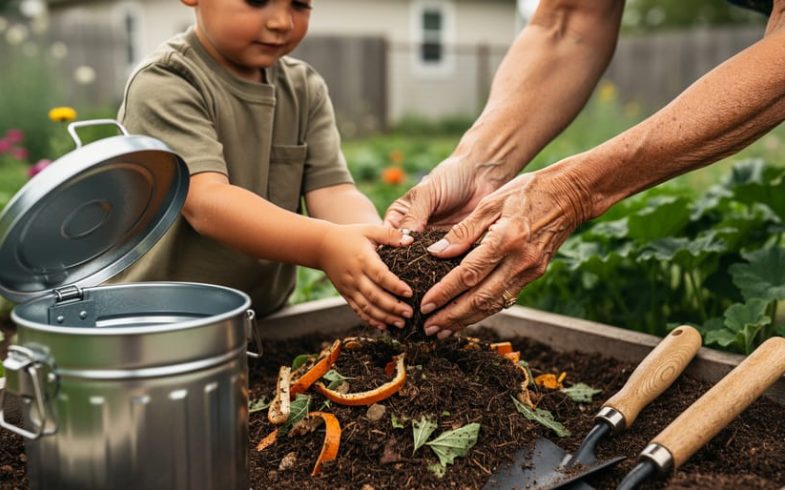
Understanding this concept matters deeply for anyone working at the intersection of immigration and sustainability. When families migrate, they carry with them agricultural knowledge, environmental practices, and cultural relationships to land and resources that shape how future generations engage with their new communities. A grandmother teaching her grandson to compost using methods from her home country, or a father passing down carpentry skills learned in his village, exemplifies how cultural and practical wisdom moves through time and across borders.
This transmission isn’t always positive. Poverty, discrimination, and environmental degradation can also pass between generations, creating cycles that communities and policymakers work to interrupt. Yet the same mechanisms that transmit hardship can also transmit resilience, adaptation strategies, and sustainable practices that prove valuable in 2026’s climate-conscious world.
This article explains how intergenerational transmission works, explores its various forms from cultural practices to economic patterns, and examines real-world examples where immigrant communities have used transmitted knowledge to build sustainable futures. Whether you’re an educator designing culturally responsive programs, a policy researcher studying integration patterns, or a community developer supporting multigenerational families, grasping this concept helps explain why families retain certain practices and how inherited knowledge can become a resource for building equitable, sustainable communities.
What Intergenerational Transmission Means
Intergenerational transmission is the ongoing process through which knowledge, values, beliefs, practices, and resources move from older generations to younger ones. Think of it as society’s way of preserving what matters, not just through formal education, but through everyday conversations, shared meals, stories told at bedtime, and traditions observed together. When a grandmother teaches her grandson how to prepare a family recipe, when a father shows his daughter how to tend a garden using methods his own parents taught him, or when an elder shares stories about migrating to Canada and building a new life, intergenerational transmission is happening.
This process isn’t limited to family settings. Communities, cultural groups, and societies all engage in transmission through religious practices, language use, workplace mentorship, and collective memory. What passes between generations includes tangible things like property and financial assets, but more often it’s the intangible, cultural identity, moral frameworks, practical skills, environmental wisdom, and ways of understanding the world.
- Cultural Capital
- The knowledge, skills, education, and cultural competencies that families pass down, giving younger generations tools to navigate society and maintain their heritage.
- Social Heritage
- The collective traditions, customs, values, and identity markers that define a community and are preserved through intergenerational sharing.
- Knowledge Transfer
- The deliberate or organic sharing of practical skills, wisdom, and information from experienced individuals to newcomers or younger members.
- Generational Continuity
- The ongoing connection between past, present, and future generations that maintains cultural identity and social cohesion over time.
Intergenerational transmission differs from simple information sharing because it’s rooted in relationship and lived experience. It creates continuity, helping communities maintain their identity even as they adapt to new circumstances. For immigrant families in Canada, this process becomes especially significant, it’s how cultural roots stay strong while new branches grow in Canadian soil, creating something both inherited and new.
How Intergenerational Transmission Works

The Role of Family and Community
Families operate as the primary classroom where children absorb everything from table manners to moral frameworks. Parents and grandparents don’t just tell stories, they model behaviours, make daily choices, and create environments where certain values feel normal. A grandmother teaching her grandson to cook traditional meals isn’t simply preserving a recipe; she’s transmitting cultural identity, work ethic, and connection to heritage through each measured spice and kneading motion.
For immigrant families, this process becomes particularly complex. Parents often navigate what researchers describe as conscious and unconscious transfer across two cultural systems simultaneously, maintaining homeland traditions while adapting to Canadian norms. A Punjabi family in Surrey might speak Punjabi at home, celebrate Vaisakhi, and prioritize extended family connections, while also embracing hockey, Canadian politeness conventions, and bilingual education for their children.
Community networks extend this transmission beyond the household. Religious institutions, cultural associations, and ethnic neighbourhoods create spaces where immigrants can reinforce shared values collectively. When Somali families in Ottawa gather for community events, children observe not just individual family practices but broader patterns of their culture, how elders are respected, how disputes are resolved, how success is defined. These repeated exposures across multiple families strengthen transmission in ways a single household cannot achieve alone.
Formal and Informal Channels
Intergenerational transmission unfolds through two distinct yet complementary pathways. Formal channels operate through structured institutions and deliberate teaching. Schools, apprenticeship programs, religious education, and community workshops provide organized spaces where older generations systematically pass on knowledge. An immigrant parent enrolling their child in heritage language classes exemplifies formal transmission, the curriculum is planned, the goals explicit, and the learning measurable.
Informal channels, by contrast, work through the fabric of daily life. A grandparent preparing a traditional meal while a child watches, neighbors sharing gardening wisdom over a backyard fence, or families celebrating cultural festivals together, these moments transmit values, practices, and knowledge without formal structure. Informal education through ICH (Intangible Cultural Heritage) often proves more powerful than classroom instruction because it embeds learning in lived experience and emotional connection.
Most effective transmission blends both approaches. A teenager might study their family’s language formally at school, then practice it informally at home during meals and storytelling. The formal channel builds skills; the informal channel makes those skills meaningful and sustainable across generations.
What Gets Transmitted Between Generations
Intergenerational transmission encompasses a remarkably broad range of elements that shape who we are and how we live. Understanding what actually gets passed down helps clarify why this process matters so deeply for both individuals and communities.
Cultural values and beliefs form the foundation of what moves between generations. These include attitudes about family responsibility, work ethic, gender roles, education, and community participation. Immigrant families often navigate the complexity of transmitting values from their heritage culture while adapting to the values prevalent in Canada. A Vietnamese-Canadian grandmother teaching her granddaughter about filial piety, for instance, transmits not just a concept but an entire framework for understanding family relationships.
Language stands as one of the most visible forms of transmission. Beyond vocabulary and grammar, language carries idioms, humor, and ways of thinking that connect younger generations to their cultural roots. Many immigrant families work deliberately to maintain heritage languages alongside English or French, recognizing that language loss means losing access to cultural nuances and family history.
Knowledge and skills pass through both formal teaching and lived example. This category includes everything from traditional cooking techniques and craft skills to professional expertise and problem-solving approaches. An Iranian-Canadian engineer who brings his daughter to community projects doesn’t just teach technical skills, he transmits an approach to learning and contributing that shapes her worldview.
Environmental knowledge represents a crucial element, particularly as communities face climate challenges. Indigenous families and immigrant communities from agricultural backgrounds often hold deep ecological understanding about local ecosystems, sustainable practices, and resource stewardship. This knowledge becomes increasingly valuable as Canada works toward environmental sustainability.
Economic practices and resources also transfer across generations, not just financial assets, but attitudes toward money, entrepreneurial approaches, and economic strategies that families develop. Immigrant entrepreneurs frequently pass along both capital and business acumen, creating pathways for economic stability.
Social networks and relationships form another vital category. Grandparents who introduce grandchildren to community members, religious organizations, or cultural associations transmit social capital that opens doors and provides support throughout life. These connections often prove essential for navigating new cultural contexts and building belonging across generations.
Where Intergenerational Transmission Matters Most
Preserving Cultural Identity in Immigrant Communities
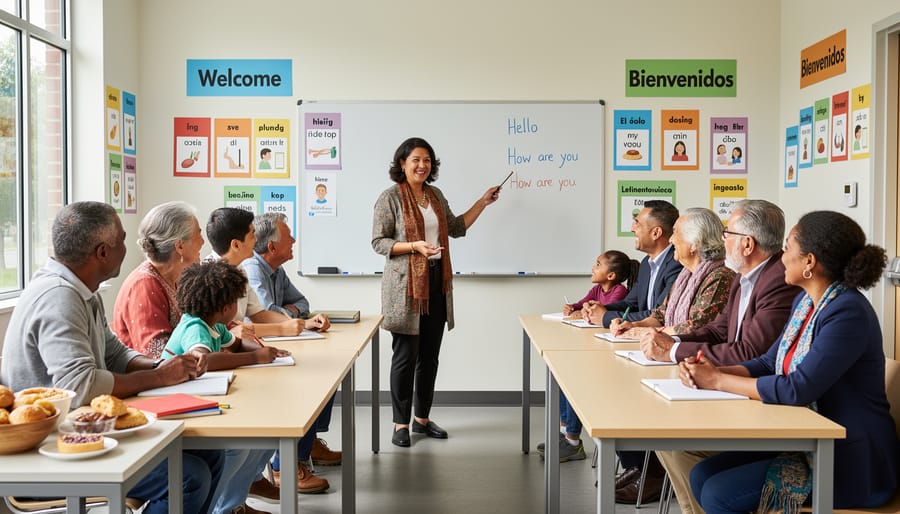
In Richmond, British Columbia, the Chen family has spent three decades ensuring their Canadian-born children and grandchildren remain connected to their Cantonese heritage. Grandmother Mei Chen teaches her grandchildren traditional cooking methods every Sunday, passing down recipes that have sustained the family for five generations. Her daughter coordinates language lessons at the local community center, where second and third-generation children learn Cantonese alongside cultural customs.
The family’s approach combines adaptation with preservation. While they celebrate Canadian holidays, they also maintain lunar new year traditions, mid-autumn festivals, and ancestral remembrance practices. The grandchildren speak English at school but switch to Cantonese at family gatherings, creating a bilingual environment that honors both identities.
Their biggest challenge came when the teenage grandchildren showed waning interest in language classes. The family responded by connecting cultural learning to contemporary interests, using Cantonese music, films, and social media content to bridge generational perspectives. They also created family storytelling evenings where elders share immigration experiences, helping younger members understand their heritage’s relevance to their Canadian identity.
This deliberate, flexible approach demonstrates how immigrant families successfully transmit cultural identity when they balance respect for tradition with acknowledgment of evolving contexts.
Transmitting Environmental Values and Sustainable Practices
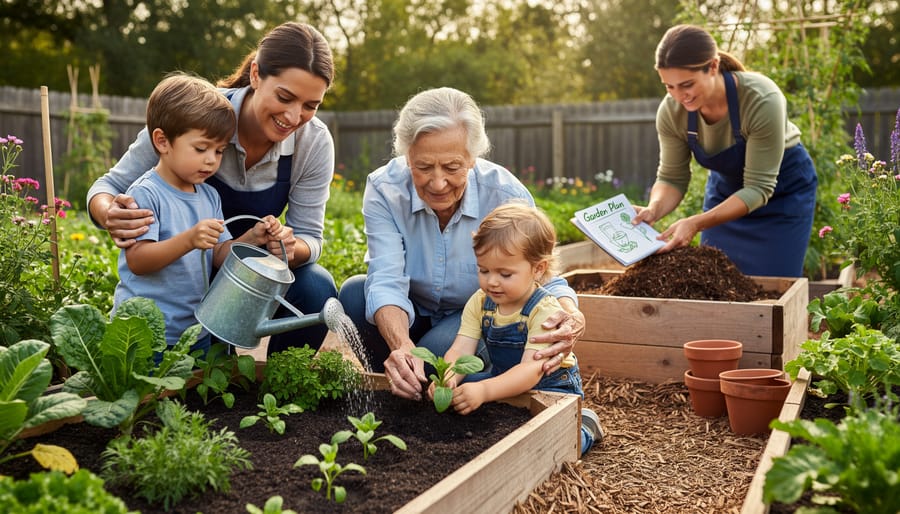
Environmental knowledge flows between generations through countless everyday moments, a grandmother teaching her grandchildren which plants are edible during a forest walk, a father explaining composting techniques learned in his home country, an elder sharing water conservation practices developed over decades. These transmissions carry profound importance for building sustainable communities in Canada.
Consider the Vietnamese-Canadian family in Vancouver whose parents brought traditional rice-farming knowledge about soil regeneration and seasonal planting cycles. While their children may not farm commercially, they’ve adapted these principles to urban gardening, teaching their own kids about companion planting and natural pest control, ecological wisdom crossing continents and generations.
Indigenous communities demonstrate the deepest reservoirs of transmitted environmental knowledge. Coast Salish families pass down detailed understanding of salmon life cycles, traditional fishing practices, and marine ecosystem stewardship through ceremony, storytelling, and hands-on participation. This knowledge, refined over millennia, offers critical insights for contemporary climate adaptation.
Immigrant families often blend traditional environmental practices with new sustainability values learned in Canada. A Syrian family might combine ancestral water-saving techniques with Canadian recycling systems, creating hybrid approaches their children inherit. Educational opportunities, including the evolving study policy for newcomers help facilitate this knowledge exchange across institutional settings.
The transmission works both ways. Second-generation Canadians sometimes reintroduce parents to concepts like carbon footprints or ethical consumption, while parents share traditional conservation practices developed in resource-constrained environments. This bidirectional flow strengthens household sustainability and builds climate-resilient communities rooted in diverse environmental wisdom.
Challenges and Disruptions to Transmission
Geographic separation sits at the heart of many transmission challenges for immigrant families. When grandparents remain in the home country while children and grandchildren build lives in Canada, the daily proximity that naturally enables cultural transfer disappears. Video calls and summer visits help bridge the gap, but they can’t fully replicate the immersive experience of shared meals, neighborhood walks, and spontaneous storytelling that once carried traditions forward.
Language shift creates perhaps the most visible disruption. First-generation immigrants often speak their heritage language fluently, while second-generation children become bilingual, and third-generation grandchildren may understand only fragments, or none at all. This linguistic erosion doesn’t just affect communication; it severs access to proverbs, humor, religious texts, and the cultural concepts that certain languages express more precisely than others. When younger generations can’t converse comfortably with their elders, entire knowledge systems risk fading.
Cultural adaptation pressures pull families in competing directions. Newcomers face genuine needs to understand Canadian workplace norms, navigate educational systems, and integrate into broader society, efforts that federal constitutional rights protect and encourage. Yet this adaptive work sometimes leaves less bandwidth for maintaining home-country practices. Children who feel different at school may resist speaking their heritage language or participating in traditional celebrations, creating tension between honoring roots and fitting in.
Rapid technological and social change amplifies generational gaps. When elder knowledge, farming techniques, traditional medicine, craft skills, seems irrelevant to younger generations navigating digital economies, transmission breaks down not from lack of opportunity but perceived obsolescence. Yet sustainability research increasingly validates traditional ecological knowledge that previous generations dismissed, suggesting today’s disruptions may reverse as environmental urgency grows.
Common Questions About Intergenerational Transmission
Why does intergenerational transmission matter for sustainability?
Transmission of environmental values and practices between generations creates lasting behavioral change that extends beyond individual lifespans. When older generations pass down sustainable habits, resource conservation knowledge, and respect for ecosystems, they build communities with deeper ecological awareness and stronger commitment to long-term environmental stewardship.
How do immigrant families navigate competing cultural transmissions?
Immigrant families often blend heritage culture with host country influences, creating hybrid transmission processes where children learn to navigate multiple cultural frameworks. Parents may prioritize transmitting core values and language while allowing adaptation in areas like social customs, and many families strategically use community networks, cultural organizations, and visits to their countries of origin to strengthen heritage transmission.
Can broken or interrupted transmission be restored?
Yes, though it requires intentional effort. Communities can rebuild transmission through elder mentorship programs, language revitalization initiatives, cultural education in schools, and creating spaces where generations interact regularly. Documentation projects that record oral histories and traditional knowledge also help bridge gaps caused by displacement or systemic exclusion.
How is intergenerational transmission changing with technology?
Digital tools create new transmission channels through video calls connecting distant family members, online archives preserving cultural knowledge, and social media sharing traditions across borders. While aging support technologies and platforms enable connection, families still balance screen-based interaction with in-person experiences that transmit embodied knowledge and emotional bonds.
Does intergenerational transmission happen only within families?
No. While families are primary transmission sites, communities, schools, workplaces, cultural organizations, and faith groups all serve as spaces where knowledge and values pass between generations. Community gardens, apprenticeships, volunteer programs, and neighborhood initiatives create transmission opportunities beyond household walls, strengthening broader social fabric.
These questions reflect real concerns for people working to maintain cultural continuity while adapting to new contexts. Understanding that transmission is both resilient and flexible helps communities approach it strategically rather than viewing it as something that simply happens or doesn’t. The process responds to intentional effort, which means individuals and organizations can actively strengthen the bonds between generations through thoughtful programs and everyday interactions that honor both heritage and evolution.
Intergenerational transmission shapes the foundation of thriving communities across Canada. When knowledge, values, and practices flow between generations, they create bridges that connect past wisdom with future possibilities. This process isn’t static, it evolves as each generation adapts what they’ve received to new contexts while preserving what matters most.
For immigrant communities, transmission becomes particularly powerful. Families navigating new environments draw strength from cultural practices passed down while simultaneously contributing fresh perspectives that enrich Canadian society. The interplay between preservation and innovation creates dynamic communities where tradition and progress coexist.
Understanding how transmission works empowers communities to strengthen these connections deliberately. Whether through language programs, community gatherings, environmental initiatives, or storytelling projects, intentional support for intergenerational exchange builds resilience. When elders share their knowledge and younger generations bring new insights, communities gain the tools to address contemporary challenges, from climate change to social cohesion, with wisdom drawn from multiple sources.
The opportunities ahead are significant. As Canada continues welcoming diverse populations, intergenerational transmission becomes a vital force for building a society that values both heritage and innovation, creating communities where everyone belongs and contributes to a sustainable future.
