
What Is Intergenerational Knowledge (and How Does It Pass From One Generation to the Next)?
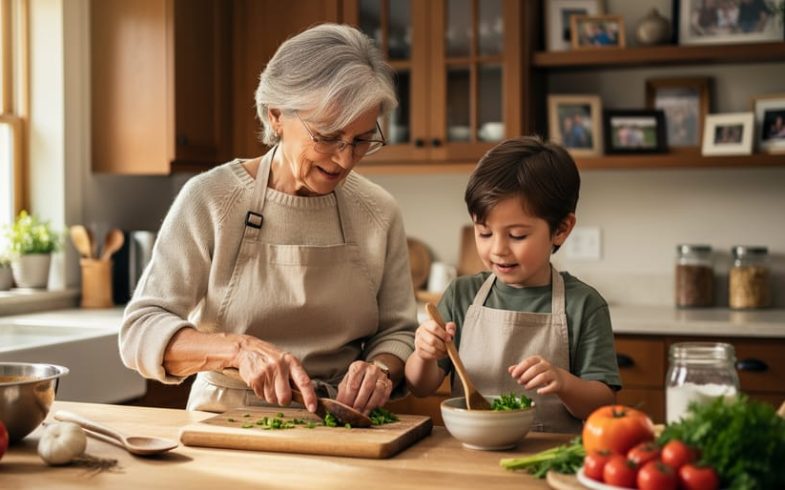
Intergenerational knowledge is the skills, stories, values, and practical know-how that older generations pass to younger ones, whether through a grandmother’s recipe, a farmer’s reading of the sky, or a language spoken at the dinner table. It moves through demonstration, storytelling, apprenticeship, and everyday shared life, which is why scholars often describe it as intergenerational transmission in action.
This matters because so much of what a community knows was never written down. It lives in people. When families migrate, that knowledge travels with them, and it can either deepen in a new place or thin out within a generation if no one makes room for it. Techniques for growing food in poor soil, repairing instead of replacing, conserving water, or caring for neighbors have sustained communities for centuries, and many are now drawing fresh attention from sustainability researchers and local planners.
For immigrants, educators, policy makers, and community developers, understanding how this knowledge is shared, what forms it takes, and where it works best is a practical question, not just a sentimental one. This article defines the concept in plain language, explains how it passes between generations, breaks down its main types, and looks at real examples of it strengthening families, classrooms, and neighborhoods.
What Intergenerational Knowledge Means in Plain Language
Why It Matters for Immigrant and Newcomer Families
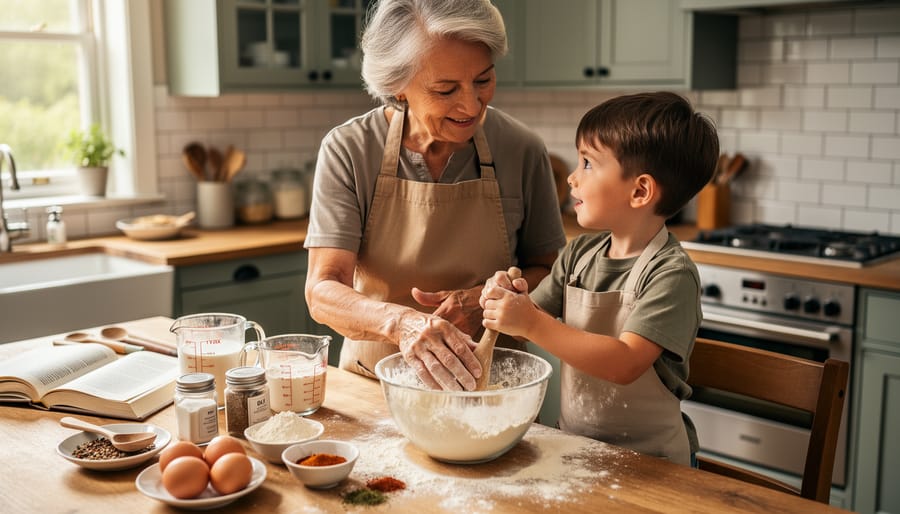
Migration can change how knowledge moves between generations. Sometimes it strengthens the bond, and sometimes it strains it. A grandmother who once taught her granddaughter to season a pot of stew by smell may now live thousands of kilometres away, and the lesson has to travel by video call or wait for a visit. Long work hours, language gaps between grandparents and Canadian-born children, and the pull of a new school culture can quietly thin out what gets passed on.
Still, newcomer families rarely just lose their knowledge. They reshape it. A farming method learned in one climate gets adjusted for a shorter Canadian growing season. A holiday recipe picks up local ingredients. A community custom finds a new home in a church basement, a mosque, or a neighbourhood centre.
This matters because knowing where you come from helps people feel they belong where they are now. Preserved and adapted traditions give children a sense of identity and give families a shared language for hard times. Knowing how to find your footing in a new country is part of this too, including understanding your constitutional rights as a consumer and resident. Elders who have already walked that path can help younger family members do the same.
How Intergenerational Knowledge Works: From Storytelling to Shared Practice
Case Study: A Garden That Crossed an Ocean
Picture a family that arrives in Ontario from a farming region, with a grandmother who brings a small envelope of saved seeds tucked into her coat. This is an illustrative example, not a record of one real household, but it shows how the process often unfolds.
In their first spring, the grandmother plants tomatoes and beans in a rented backyard plot. Her grandchildren tag along at first out of curiosity. She shows them how to dry seeds from the best plants, label them, and store them for the next season. She also builds a compost pile from kitchen scraps and dry leaves, explaining by touch and smell when it’s ready. None of this is written down. The children learn by doing, which is the tacit knowledge we described earlier.
The grandchildren, meanwhile, help in return. They translate seed catalogues, look up local frost dates, and ask the questions that make her explain her reasoning out loud. That’s the two-way flow at work.
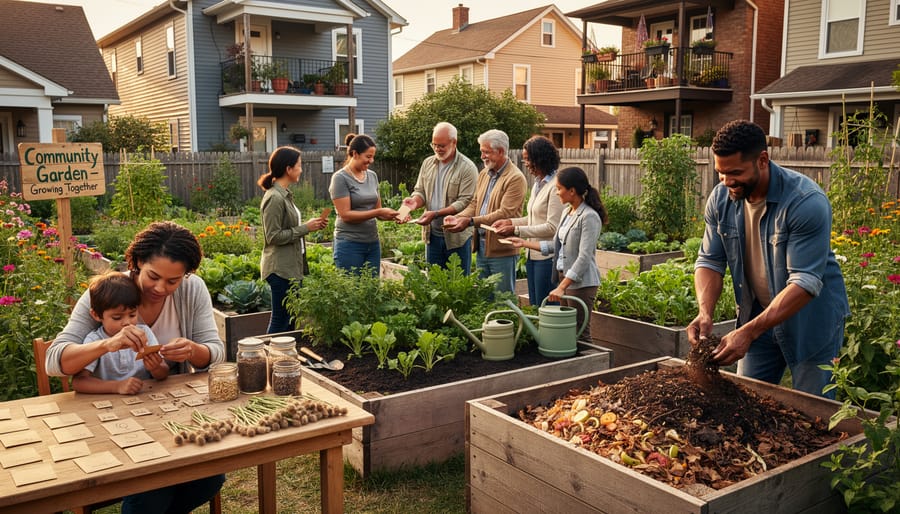
Neighbours notice the thriving plot, and soon the family is invited to share their methods at a nearby community garden. Newcomer families can face systemic exclusion so a shared garden can become a rare, welcoming place where their expertise is plainly valued. Seed swaps begin, and compost workshops follow.
What began as one grandmother’s habit becomes a small, living example of how knowledge crosses generations, cultures, and even an ocean.
Types of Intergenerational Knowledge Worth Passing On
Families and communities pass along far more than recipes and old photographs. When you look closely, the knowledge moving between generations falls into five broad groups, and most households carry a mix of all of them.
- Practical and trade skills: a grandfather showing a teenager how to repair a bicycle, sew a hem, or preserve a summer’s worth of tomatoes.
- Language and storytelling: speaking a heritage language at the dinner table, or retelling the story of how the family first arrived.
- Cultural and spiritual traditions: learning the songs, holidays, and rituals that mark a year and give a family its rhythm.
- Environmental and land-based knowledge: reading weather and seasons, knowing when to plant, and understanding which plants heal and which harm.
- Civic and settlement knowledge: understanding local services, filling out forms, and finding your way through unfamiliar systems like schools, clinics, and banks.
These categories overlap constantly. A pot of soup can carry a recipe, a story about the person who taught it, and the memory of a harvest all at once.
The last category deserves extra attention, especially for newcomers. Settlement knowledge is often passed sideways as well as down, with neighbours and fellow community members sharing hard-won lessons about how things actually work. Children who learn English or French quickly may become the family’s guides to a new system, which turns the usual direction of teaching on its head.
No single type matters more than the others. Practical skills keep a household running, language and tradition keep it connected to its roots, land-based knowledge builds a bond with place, and civic know-how helps people find their footing. Together they form a toolkit that helps each generation adapt without losing sight of where it came from.
How Intergenerational Knowledge Is Used in Communities and Sustainability Work
A Personal Story: Learning the Land From an Elder
Amara arrived in Winnipeg at fourteen, still carrying the smell of her family’s kitchen in her memory and not much confidence in the cold. That spring, a volunteer program paired her with Mr. Cardinal, a Métis elder who spent his weekends on a patch of land near the river.
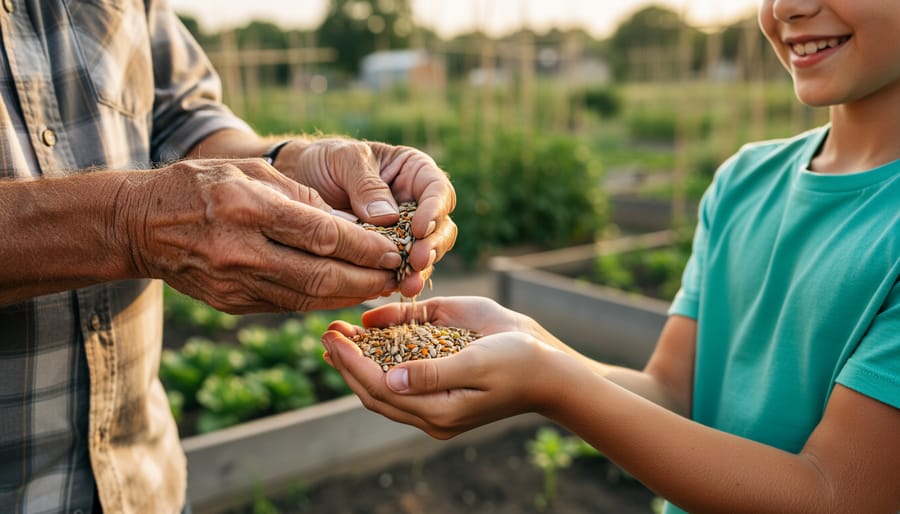
He didn’t hand her a textbook. He handed her a pair of gloves and asked her to watch the ground. “When the soil crumbles in your fist, it’s ready,” he said. Over several weeks, she learned how he read the season in the thaw, in which birds returned first, in how the willow buds swelled before the last frost let go.
What she didn’t expect was how much she had to offer back. She showed him a way of layering seedlings her grandmother used, and he tried it on his tomatoes. She also set up a shared photo album on his tablet so his stories would be kept, with her translating the plant names into her own language beside his.
Researchers describe this kind of exchange when they talk about integrating TEK into management but in this garden it simply looked like two people growing something together. Amara gained a sense of place. Mr. Cardinal gained a keeper for what he knew.
Common Questions About Intergenerational Knowledge
How is intergenerational knowledge different from intergenerational wealth transfer?
Wealth transfer is about money, property, and assets passed down in families. Intergenerational knowledge covers the skills, stories, values, and know-how that people share, and it costs nothing to pass along. Both fall under the wider idea of intergenerational transfer.
What happens when families are separated by migration?
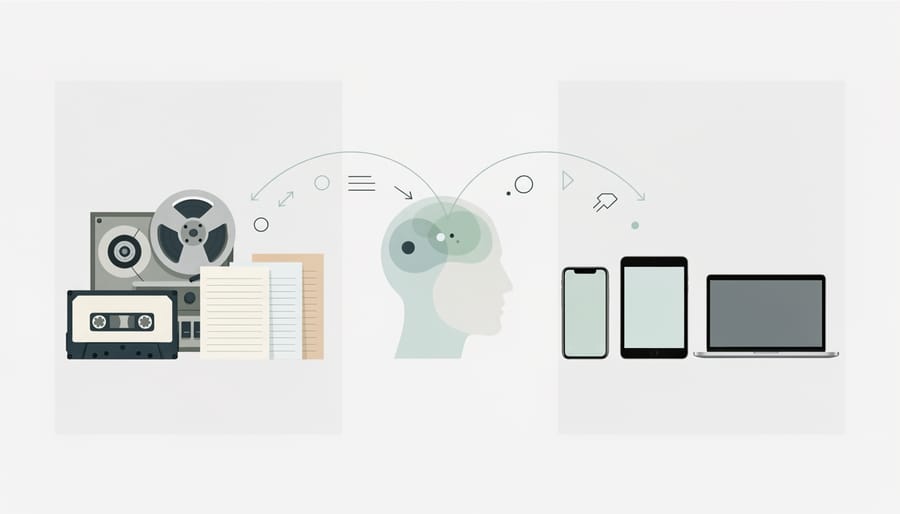
Distance can slow the flow of knowledge, but it rarely stops it. Video calls, shared recipes, voice recordings, and visits all keep elders and youth connected. Some families find that migration sparks new interest in heritage, since learners want to hold on to what feels at risk.
Can intergenerational knowledge be lost?
Yes. When a skill is learned only by doing, it can fade if no one practises it with an elder before the chance passes. Recording stories and working side by side are two of the best ways to keep it alive.
How can communities and schools support the process?
Mentoring programs, community gardens, oral history projects, and classroom visits from elders all create space for sharing. Schools can invite family members to teach a craft or tell a story, so learning goes both ways.
Families who move across borders often face extra questions about documents and legal status, and those practical worries can crowd out time for sharing traditions. A grandparent visiting for a few months, for example, may need to understand a visitor record before planning a longer stay with grandchildren. Broader policy shifts, such as new mobility agreements can also change how easily relatives travel and reunite, and with them how often knowledge gets shared in person.
Whatever the circumstances, the simplest step is often the most effective: ask a question, listen closely, and make time to learn together.
Intergenerational knowledge is a living bridge between past and future. Every recipe, seasonal habit, story, and hard-won lesson that moves from one person to another keeps a thread of experience alive, while the younger voices who ask questions and bring new tools help that knowledge adapt. It is a close cousin of the wider idea in Understanding Intergenerational Transfer, where wealth, heritage, and know-how all travel across generations. Of those, knowledge is the one anyone can pass on, no matter their income or address.
For newcomers, this exchange can turn a new place into a home. For communities, it builds the trust and practical wisdom that sustainable living depends on.
You don’t need a formal program to take part. Ask an elder in your life about a skill they learned young. Teach someone a practice you know well, whether it’s baking, mending, planting, or navigating a form. Or support a local mentoring program that brings generations together. Small exchanges like these add up, and each one carries something valuable forward.
