
Canada Announces Accelerated Permanent Residency For Thousands Of Temporary Workers: What It Means For You
Canada is accelerating permanent residency for up to 33,000 temporary workers already living and working in smaller communities across the country, with at least 20,000 transitions targeted for 2026 and the remainder in 2027. The one-time initiative, first announced in last November’s federal budget, fast-tracks skilled temporary workers who have already applied for permanent residence through specific programs and have contributed to their communities for at least two years.
The policy represents a significant shift in how Canada manages the transition from temporary to permanent status for workers who are already deeply integrated into local economies and communities. Unlike traditional pathways that can take years to process, this accelerated stream draws from existing application inventories, requiring no additional action from eligible applicants. Immigration, Refugees and Citizenship Canada will identify and process qualified applications directly, streamlining a system that has often left workers in prolonged uncertainty.
For thousands of families, this means the difference between temporary status and the stability of permanent residence. The initiative prioritizes workers in smaller communities, recognizing both their economic contributions and the sustainability challenges these areas face in attracting and retaining skilled labor. At a time when rural and regional communities across Canada struggle with population decline and workforce gaps, converting temporary workers who have already built roots represents both pragmatic policy and social investment.
This development arrives as Canada recalibrates its immigration system to balance economic needs with integration capacity. The question now shifts from announcement to implementation: how quickly can the system process these applications, and what does this model signal for future immigration reform?
What This New Initiative Means for Temporary Workers

Canada’s federal government has committed to transitioning up to 33,000 temporary workers to permanent residence status through a targeted, two-year initiative running from 2026 through 2027. This isn’t a new application stream, it’s an accelerated processing commitment for workers who have already applied through established pathways and meet specific criteria. The approach represents a shift from managing backlogs to actively resolving them, particularly for skilled workers who’ve been contributing to Canadian communities while waiting in administrative limbo.
The scale matters. Immigration, Refugees and Citizenship Canada (IRCC) aims to process at least 20,000 applications in 2026 alone, with the remaining workers gaining permanent status in 2027. For those who qualify, this means a tangible timeline where there previously wasn’t one. The workers targeted by this initiative have already demonstrated their value, they’re employed, integrated into their communities, and meet the requirements of Canada’s skilled worker programs. What they’ve lacked is certainty.
Here’s what makes this different from typical processing improvements: eligible workers don’t need to submit additional documentation, pay new fees, or navigate another application portal. IRCC will identify qualifying applications within its existing inventory and prioritize them for final processing. First announced in the federal budget last November, the initiative reflects a policy recognition that these workers have already cleared significant hurdles. They’ve secured jobs, established roots in smaller Canadian communities, and proven their ability to contribute. What the accelerated timeline provides is the stability of permanent status without adding more administrative burden to people who’ve already been waiting.
Who Qualifies for Accelerated Processing
Not every temporary worker will qualify for this accelerated pathway. Eligibility is narrowly defined and deliberately targeted at those who’ve already taken concrete steps toward making Canada home.
To qualify, workers must have already submitted applications for permanent residence through specific programs, including the Provincial Nominee Program, the Atlantic Immigration Program, the Rural and Northern Immigration Pilot, or certain Agri-Food streams. This isn’t a new application window; it’s a processing boost for people already in the queue.
The second critical requirement: applicants must have lived in a smaller Canadian community for at least two years. This residency threshold matters more than it might initially appear. It ensures that those gaining permanent status have already invested time building roots in the regions that need them most.
Why tie eligibility to smaller communities? These areas face a unique challenge. They rely heavily on temporary workers to fill persistent labor gaps, yet struggle to retain talent when workers move to larger cities seeking stability. By prioritizing those who’ve demonstrated commitment to these communities, the policy addresses both immediate workforce needs and longer-term sustainability concerns.
When workers transition from temporary to permanent status in these regions, they’re more likely to stay, buy homes, enroll children in local schools, and participate in community planning. This stability strengthens local economies, supports regional infrastructure development, and helps smaller communities maintain the population base needed for essential services.
The criteria aren’t arbitrary, they reflect a targeted approach to regional economic development, rewarding those who’ve already chosen to contribute where their skills matter most.
Why This Matters for Canada’s Smaller Communities
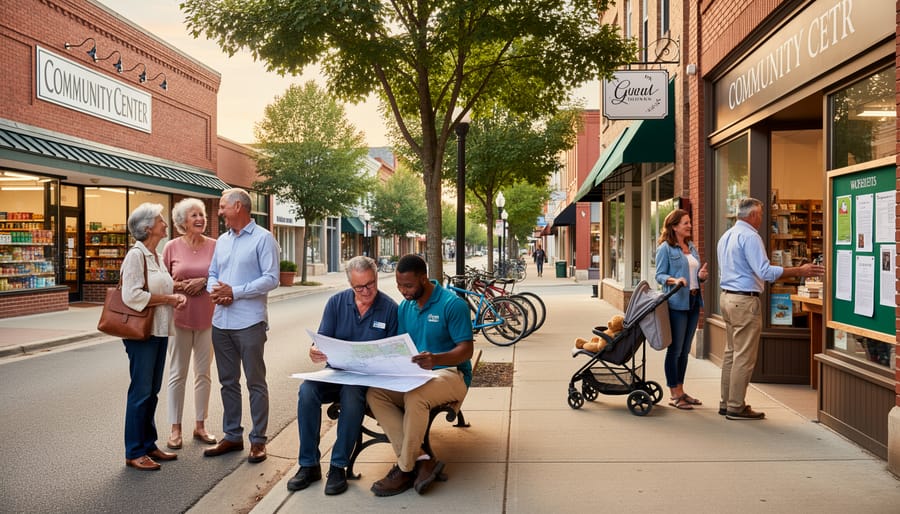
Smaller communities across Canada have long grappled with a persistent challenge: how to sustain local economies and services when young people move to cities and aging populations strain resources. The accelerated permanent residency initiative targets workers who have already chosen to live in these communities for at least two years, transforming what might have been a temporary stopgap into a foundation for long-term stability.
When temporary workers become permanent residents, they shift from survival mode to investment mode. They buy homes instead of renting month-to-month. They start businesses, enroll children in local schools, and commit to community organizations. This transition matters profoundly for towns and smaller cities that need stable populations to justify everything from public transit routes to healthcare facilities. A baker in rural Ontario or a welder in a small Manitoba town becomes not just a worker filling a gap, but a taxpayer, neighbor, and community member with a stake in the future.
The sustainability connection runs deeper than economics. Smaller communities often serve as stewards of agricultural land, natural resources, and ecosystems that larger cities depend on. Stable populations enable better long-term environmental planning and resource management. When people know they’re staying, they invest in sustainable practices, whether that’s regenerative farming techniques, local renewable energy projects, or conservation initiatives. Temporary status creates uncertainty that discourages this kind of investment.
Labor shortages in smaller communities aren’t just about filling positions. They’re about maintaining the services that make these places livable: healthcare workers for rural clinics, teachers for local schools, tradespeople to maintain aging infrastructure. The combination of emerging technology and human capital can address some gaps, but communities still need people committed to living there. This policy recognizes that workers who’ve already demonstrated that commitment deserve a pathway to permanence, and that Canada’s smaller communities deserve the stability that brings.
The Human Side: Stories from the Ground

For Ana, a healthcare worker in a northern Ontario town of 15,000, the shift from temporary to permanent status means she can finally say yes to her daughter’s question: “Can we get a dog?” It’s a small thing, but it represents something bigger. When you’re on a temporary work permit, you hesitate to put down roots. You avoid long-term commitments because you don’t know if you’ll be here next year. Permanent residency changes that calculation entirely.
Ana arrived three years ago to fill a critical nursing shortage at the local hospital. She’s lived in the same rental, paid taxes, and become part of the community. Her daughter attends the local school and has friends. But every decision has been provisional. Buying furniture felt risky. Enrolling her daughter in activities that required year-long commitments felt presumptuous. The constant uncertainty shaped everything from what she kept in her apartment to how she answered questions about the future.
The emotional weight of temporary status often goes unnoticed in policy discussions, but it shapes daily life in profound ways. Workers describe feeling like guests rather than members of their communities, even after years of contributing. They hesitate to invest in professional development or buy homes because their legal status remains precarious. Family planning gets postponed. Relationships with neighbours stay surface-level because explaining your situation gets exhausting.
Permanent residency flips that script. It means workers can sponsor family members to join them, something many have waited years to do. Parents can finally bring aging relatives. Young couples can plan for children without worrying about visa renewals complicating parental leave. It means you can leave a job that’s not working without losing your legal status, changing the power dynamics in workplace relationships.
For smaller communities, the difference shows up in housing markets and local businesses. When workers gain permanent status, they’re more likely to buy homes, start businesses, and participate in local governance. They join boards, volunteer for committees, and invest in community projects. The transition from temporary to permanent doesn’t just change legal status, it transforms how people engage with the places they call home.
These illustrative examples reflect patterns described by immigration researchers and community development specialists, though specific details are composites rather than individual accounts.
How This Fits Into Canada’s Broader Immigration and Sustainability Goals
This initiative reflects a fundamental shift in how Canada thinks about immigration: not just as a pipeline to fill labor shortages, but as a tool for building sustainable, thriving communities across the country. By prioritizing workers who have already put down roots in smaller communities, the government acknowledges that permanent residency creates conditions for deeper investment, both economic and social, that temporary status can never fully unlock.
When workers know they can stay, they make different choices. They buy homes instead of renting short-term. They enroll their children in local schools with confidence. They invest in businesses, volunteer in community organizations, and participate more fully in civic life. This stability ripples outward, strengthening local economies and creating the tax base that smaller communities need to maintain infrastructure and services. It’s the difference between transient residents and genuine community members who have a stake in long-term planning.
The sustainability dimension goes beyond environmental considerations, though those matter too. Concentrating population growth in already-strained urban centers accelerates urban sprawl increases pressure on housing markets, and strains public transit and services. By encouraging settlement in smaller communities where infrastructure often sits underutilized, this policy helps distribute growth more evenly. It addresses population ageing in rural and small-town Canada, where declining populations threaten the viability of schools, hospitals, and local businesses.
There’s also an element of fairness embedded here. Temporary workers contribute taxes, fill essential roles, and integrate into their communities, yet they live with uncertainty that affects every major life decision. Accelerating pathways to permanence reduces that precarity and signals that Canada values their contributions beyond short-term economic utility. This two-year initiative represents a pilot approach to addressing backlogs while testing whether fast-tracking can work at scale, potentially informing future reforms that balance Canada’s economic needs with its commitment to building resilient, inclusive communities from coast to coast.
What Happens Next: Timeline and Process
For temporary workers who meet the eligibility criteria, the path forward is refreshingly straightforward. IRCC will handle the heavy lifting by processing applications from existing inventories, which means eligible workers don’t need to submit new paperwork or take additional steps. The department targets transitioning at least 20,000 workers to permanent residence in 2026, with the remaining applicants processed in 2027.
Here’s what eligible workers can expect during the accelerated processing period:
- IRCC reviews your existing permanent residence application to confirm you meet the criteria (prior application through qualifying programs and at least two years in a smaller community).
- Your application moves to priority processing within the 2026-2027 timeline, depending on when it enters the queue.
- You receive notification from IRCC about your application status and any next steps, though most eligible applicants won’t need to provide additional documentation.
- Upon approval, you gain permanent resident status, opening the door to fuller participation in your community, including long-term planning around housing, family decisions, and career development.
Because this is a one-time initiative drawing from existing applications, no new applications are being accepted specifically for this accelerated pathway. Workers who haven’t already applied through the qualifying programs won’t be eligible for this particular initiative, though other permanent residence pathways remain available.
For reliable updates, workers should monitor the official IRCC website and their immigration consultant or lawyer, if they’re working with one. This policy represents more than administrative efficiency. It’s an intergenerational transfer of opportunity, allowing temporary workers to build the kind of stability that benefits not just themselves but the children they’re raising in Canadian communities and the neighbors who rely on their contributions.
This accelerated permanent residency initiative represents more than administrative efficiency, it’s a recognition that sustainable communities are built on stability, not precarity. By converting temporary status into permanent belonging for 33,000 workers already rooted in smaller Canadian communities, this policy acknowledges a fundamental truth: people invest differently when they know they can stay. They buy homes, start businesses, participate in civic life, and plan futures that extend beyond the next work permit renewal.
The decision to prioritize workers who’ve already spent two years in smaller communities signals an evolving understanding of how immigration and sustainability intersect. These aren’t just labor statistics; they’re neighbours, colleagues, and community members whose permanence strengthens the social fabric that makes towns and cities resilient. When workers can build long-term lives, they contribute to the economic diversity and population stability that smaller communities need to maintain services, attract investment, and adapt to environmental and demographic challenges.
As Canada continues refining its immigration system, this initiative offers a template for what’s possible: policies that align economic needs with community sustainability and human dignity. The workers receiving permanent residence through this program will shape Canada’s future in ways large and small, from the businesses they build to the contributions their families will make for generations. That’s the kind of foundation sustainable development requires, not just temporary solutions, but lasting commitments that benefit everyone involved.
