
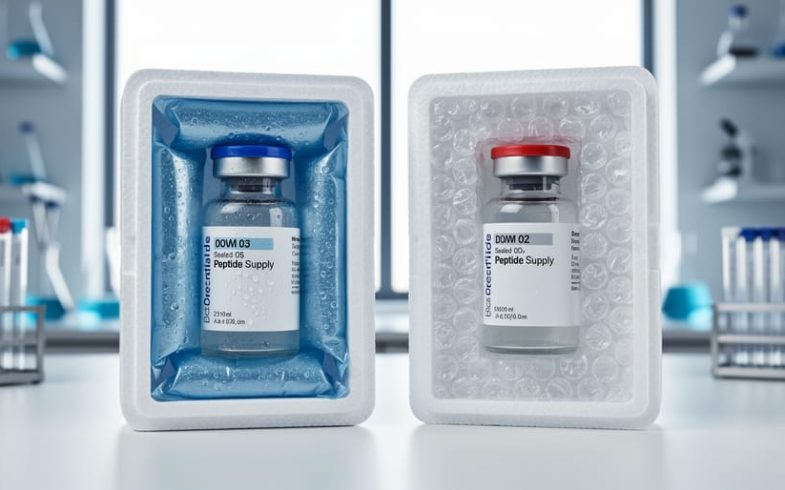
Domestic vs. Overseas Peptide Sourcing: Key Differences and What Canadian Labs Weigh
For most Canadian labs, domestic sourcing wins on speed, paperwork and predictability, while overseas sourcing earns its place only when a specific compound or a tight budget makes the longer trip worth it. The reason is simple: every extra border crossing adds customs holds, temperature risk and documentation gaps, and those costs rarely show up on the quote. This guide is for researchers, lab managers, students and procurement staff who need research peptides for legitimate lab work and want a clear way to compare their options. A Canadian supplier such as the one featured on their website shows what a local option can look like, though no single vendor suits every lab.
Think of a graduate student in Halifax whose experiment stalls because a shipment sits in customs for ten days. It’s a common frustration, and it points to a bigger issue: supply chains are part of how research gets done, and a lab’s sourcing choices ripple outward to the international community of scientists who depend on them.
Below, we compare both routes on cost, delivery time, quality verification and compliance, then close with plain guidance on who should choose which. Everything here stays within research-use contexts, and we’ve kept the focus on evidence and practical trade-offs rather than promises.
Domestic vs. Overseas Peptide Sourcing at a Glance
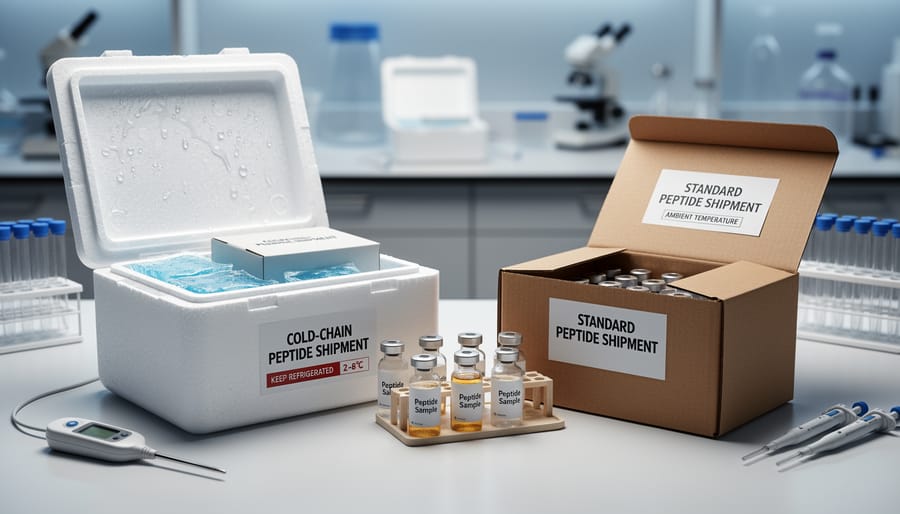
Canadian labs rarely get a clean winner here. The right route depends on order size, timeline and how much verification capacity your group has. This snapshot shows the general pattern, and the sections below unpack each row.
| Factor | Domestic (Canadian-stocked) | Overseas (direct from abroad) |
|---|---|---|
| Lead time | Often days within Canada | Usually longer, and less predictable if customs delays occur |
| Unit price | Frequently higher per vial | Often lower on the quote, especially for bulk orders |
| Shipping and cold chain | Shorter transit, fewer temperature risks | Longer transit and more handoffs to manage |
| Customs and border exposure | Minimal for in-country shipments | Duties, taxes, brokerage and possible holds |
| Documentation | Typically easier to request and follow up on | Varies widely by supplier, so verify before ordering |
| Technical support and custom synthesis | Local time zones and shorter feedback loops | Broader catalogues and specialized options, with slower back-and-forth |
Keep one caution in mind. A lower overseas quote is not the same as a lower landed cost once currency, freight and fees are added. Likewise, “domestic” can simply mean a Canadian reseller importing from abroad, so ask where the material is actually made.
If your project has a fixed window, such as a thesis deadline or a grant milestone, speed and predictability tend to carry the most weight. If you place large, recurring or highly specialized orders and can plan ahead, price and range may matter more.
What Each Sourcing Route Actually Is
Domestic Sourcing: Made or Stocked in Canada
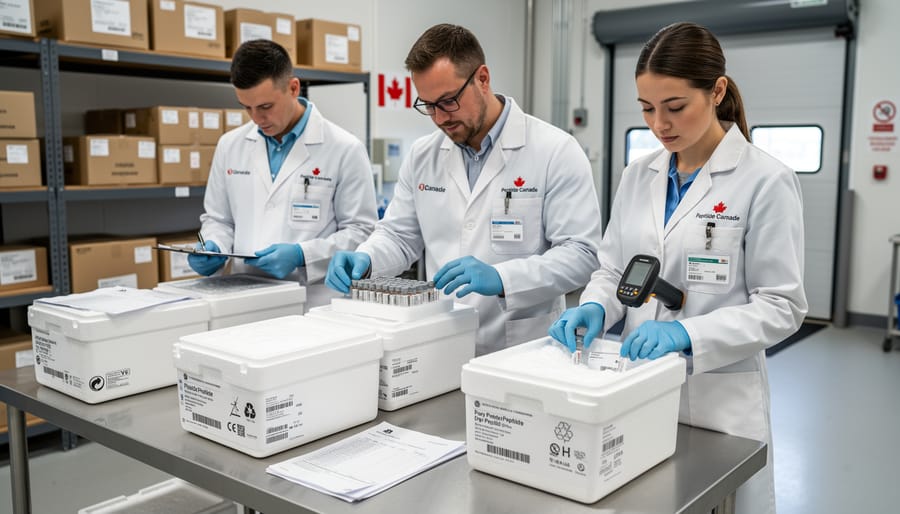
Domestic sourcing covers three main channels, and it helps to know which one you’re actually dealing with.
The first is Canadian synthesis facilities, companies that make peptides on site and ship from within the country. Some focus on custom sequences for academic and biotech clients, while others run standard catalogues. Because the same team handles synthesis and shipping, you can often ask direct questions about a specific lot.
The second is Canadian distributors. These firms stock peptides from several manufacturers, some made in Canada and some imported, and sell them under a Canadian address and invoice. That convenience is real, but “stocked in Canada” does not always mean “made in Canada,” so ask where the product originated.
The third is institutional supply. Many universities and research hospitals run approved vendor lists, central stores or purchasing consortia that route orders through familiar suppliers. For a lab in Halifax or Vancouver, this often means simpler purchase orders, local invoicing and a procurement office that already knows the process.
All three tend to offer shorter transit, Canadian-dollar pricing and easier follow-up when something goes wrong.
Overseas Sourcing: Direct From Manufacturers Abroad
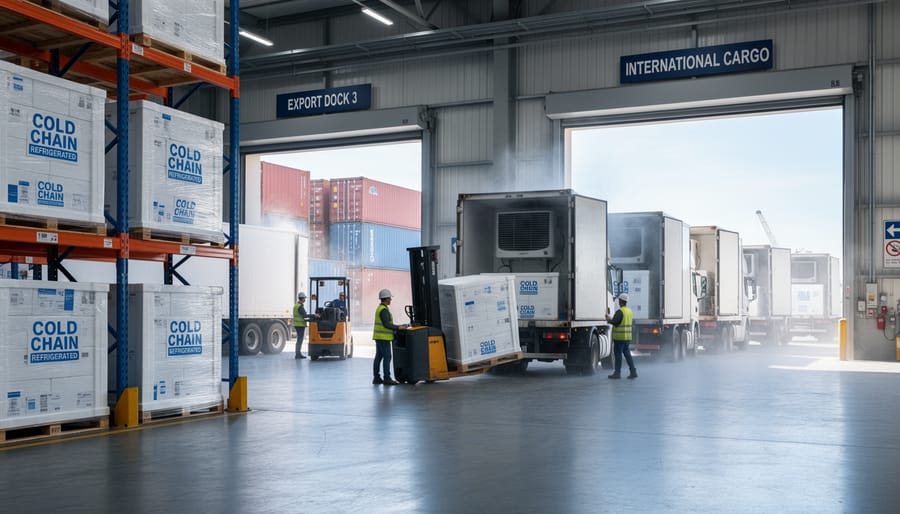
Overseas sourcing means a Canadian lab places an order with a supplier based outside the country, most often in the United States, Europe or Asia, and the shipment crosses the border before it reaches the bench. Some labs buy directly from the manufacturer that synthesizes the peptide. Others buy from an overseas distributor that stocks products made elsewhere. The first route can offer wider catalogues, custom sequences and lower unit prices on large orders, though the second may be quicker to quote.
Once the order is placed, the logistics become your responsibility. Many suppliers ship through international couriers that handle basic clearance, but larger or more complex consignments often involve a freight forwarder, who arranges transport and cold-chain packaging, and a customs broker, who prepares the paperwork for the Canada Border Services Agency (CBSA). Brokers can save time and prevent costly mistakes, though their fees belong in your budget.
The practical upside is choice. The practical trade-off is planning: you will need extra lead time, clear documentation and a contact who can sort out problems across time zones.
Terms Worth Knowing Before You Compare
A few terms come up in nearly every supplier conversation, so it helps to know them before you start comparing quotes.
- Purity grade
- The percentage of the vial’s contents that is the target peptide rather than leftover fragments or reagents. Higher numbers mean fewer unwanted components in your experiment.
- Certificate of analysis (CoA)
- A document from the supplier showing test results for a specific batch. It’s only as trustworthy as the testing behind it.
- HPLC and mass spectrometry
- Two common checks. HPLC separates a sample to estimate purity, while mass spectrometry confirms the peptide has the expected molecular weight.
- Cold chain
- Keeping a shipment at a controlled low temperature from dispatch to delivery so the peptide doesn’t degrade in transit.
- Lot traceability
- The ability to link your vial to a specific production batch and its records, which matters if results ever need to be reproduced or questioned.
- Research-use-only labelling
- A marking that states the product is intended for laboratory research, not for human or animal use.
Keep these definitions handy as you read on. Each one shapes how the two sourcing routes compare.
Domestic vs. Overseas Peptide Sourcing, Dimension by Dimension
Cost, Currency and the Real Price of a Vial
A listed price is only the starting point. Overseas catalogues often quote in US dollars or euros, so the exchange rate can shift your real cost between the day you request a quote and the day you pay. Then come the extras: international shipping, cold-chain packaging, possible duties and taxes, and brokerage fees if a customs broker clears the parcel. A vial that looks 30 percent cheaper abroad can land close to, or above, a Canadian price once those add up.
Minimum order sizes matter too. A overseas supplier may require a bulk purchase, which makes sense for a high-volume project but ties up budget and freezer space for a small one. Domestic suppliers often sell smaller quantities, so you pay for only what you’ll use.
Think about failure costs as well. If a shipment is delayed at the border or arrives compromised, you may repeat the order and lose weeks. For a grant-funded or thesis-bound project, that lost time has a price.
The practical approach is to request a full landed-cost quote from every supplier and compare totals, not unit prices.
Lead Times, Shipping and Keeping Peptides Stable
Transit time is the first place the two routes diverge. A Canadian supplier shipping within the country can often deliver in a few business days, and a problem with the order can usually be sorted out by phone the same week. Overseas orders add international freight, customs processing and a longer chain of handoffs, so the realistic window stretches to a week or two, sometimes more.
Stability follows the same pattern. Many research peptides are shipped as lyophilized powder, which tolerates short trips well, but extended time in a warm cargo hold or a depot is a risk. Fewer days in transit means fewer chances for temperature excursions, and ice packs have limited lifespans. Ask any supplier how they pack for the full journey, not just the first leg.
Border holds are the wildcard. A missing document or a vague label can park a parcel for days, and nobody can promise otherwise.
For fixed windows, such as a grant-funded project with a reporting deadline or a thesis with a committee date, buffer matters more than the quote. Build in extra weeks for overseas orders, or order early enough that a delay costs you nothing.
Quality, Testing and Traceability

Quality is where domestic sourcing most often earns its keep. A Canadian supplier is simpler to question: you can phone during your own working hours, ask for a certificate of analysis tied to the exact lot you received, and usually get an answer the same day. Overseas suppliers can be just as rigorous, but the back-and-forth stretches across time zones, and a missing document can stall a project for days.
Whichever route you choose, the paperwork is what makes results reproducible. A useful certificate of analysis shows the purity method (typically HPLC), mass-spectrometry confirmation of identity, and a lot number you can trace. Labs that build a habit of process and verification tend to catch problems early, such as sending a sample for independent third-party testing before committing to a large order.
Replacement stock is the other practical difference. If a lot underperforms, a nearby supplier can often reship quickly. An overseas replacement means another round of transit, customs and cold-chain risk, so keep your lot records handy and budget extra time.
Regulation, Customs and Compliance
At the border, a shipment of research peptides is treated like any other commercial import. Officers look at what the goods are, where they came from, what they’re worth and whether the paperwork matches the box. The Canada Border Services Agency (CBSA) publishes a plain-language Guide to importing goods that explains the general process, including how customs brokers and duties fit in.
That’s why paperwork and labelling matter. A clear commercial invoice, an accurate product description and a research-use-only label make a shipment easier to assess. Vague or mismatched documents are what tend to cause delays, and delays are what cost a lab its cold chain and its timeline. Domestic orders skip most of this, but a Canadian reseller importing from abroad is still bound by the same rules upstream.
Requirements can differ depending on the specific material and how it will be used. So don’t take a supplier’s word that something is “fully compliant” or “ships anywhere.” Confirm current rules with the relevant Canadian authorities, such as Health Canada and CBSA, and check with your institution’s research office. They know your lab’s permits, import accounts and approval steps, and a quick conversation before ordering is far cheaper than a held shipment.
Support, Customization and Supplier Relationships
When a synthesis comes back with the wrong sequence or a vial arrives warm, the quality of a supplier’s support matters as much as the price. Domestic suppliers usually have the advantage here. A technical contact in your own time zone can answer a question before your afternoon incubation ends, and many offer support in both English and French, which matters in Quebec and for bilingual institutions. Overseas teams are often just as knowledgeable, but a reply may take a full day, and the time difference can turn a quick fix into a week of back-and-forth.
Custom synthesis is where overseas suppliers can shine. Large manufacturers often handle unusual modifications, longer sequences and bulk scale-ups that smaller Canadian operations may not offer.
Return and replacement policies deserve a close read either way. Cross-border returns are slow and rarely practical, so ask upfront what happens if a lot fails verification.
Over time, a steady supplier relationship pays off, because they learn your specifications and tend to flag problems early.
Sustainability and Supply Chain Resilience
Every shipment has an environmental footprint, and peptides add a particular wrinkle. Many travel by air under cold-chain conditions, with insulated boxes, gel packs and dry ice that rarely get reused. A shorter route from a Canadian supplier usually means less distance and fewer packaging layers, though it isn’t automatic. A domestic reseller that imports from abroad and repackages can add steps rather than remove them. Ask suppliers how they ship and where the product originates before assuming the greener option.
There’s a bigger picture too. Building resilient supply chains matters when a border delay or a freight disruption can stall a grant-funded project. Local networks give labs more than one place to turn, and they keep skills and manufacturing capacity inside the country. Still, supply chain resilience doesn’t mean cutting overseas partners out entirely. Many labs benefit from a mix, using domestic supply for urgent needs and overseas suppliers for specialized or high-volume orders.
Two Labs, Two Choices: Case Studies From Canadian Research Settings
Both of the stories below are composites, built to show how the trade-offs play out. They are not real institutions or named people.
Lab A: the thesis deadline. A master’s student at a mid-sized Canadian university needed a small set of peptides for experiments that had to wrap up before her committee meeting in eight weeks. Her supervisor compared an overseas quote, which was cheaper per vial, with a Canadian supplier’s price. Once shipping, brokerage and the risk of a customs hold went into the math, the gap shrank, and a delay would have cost her a semester. They ordered domestically, got the certificate of analysis within days, and had stock on the bench in under a week. “I didn’t have room for surprises,” she said. “Paying a bit more to know when it would arrive was the right call.”
Lab B: the high-volume order. A larger research group needed a big batch of a specialized, custom-modified peptide that few Canadian suppliers listed. The lab manager, who had trained abroad and was still learning how procurement worked at his new institution, walked the order through the research office early. He asked the overseas manufacturer for full analytical documentation, planned a six-week buffer for freight and customs, and set aside a portion of the shipment for independent verification before the main experiments began. The extra steps added effort, but the volume savings justified them.
Notice what both labs did right. Neither followed a rule of thumb. Each matched the route to its own constraints, and each confirmed current import requirements with the appropriate Canadian authorities instead of leaning on supplier assurances.
Which Sourcing Route Should You Choose? Who Should Pick Domestic and Who Should Pick Overseas
Choose Domestic If…
Canadian sourcing tends to be the stronger fit when time, simplicity and support matter more than the lowest unit price. It also protects research integrity by keeping documentation and replacements close at hand. Consider domestic supply if your lab fits one of these situations:
- You’re working to a short timeline, such as a thesis deadline or grant-funded window.
- You’re placing small or one-off orders where shipping and brokerage fees would swamp the savings.
- Your group has limited capacity for border paperwork.
- You want technical support in Canadian time zones and an easy path to replacement stock.
Teaching labs and early-career researchers often benefit most. Clear ordering also makes lab knowledge handoffs smoother when students graduate and new people take over procurement.
Choose Overseas If…
Overseas sourcing earns its place when a lab can plan around the delays and has the capacity to check what arrives. It tends to be the stronger fit in situations like these:
- The order is large or recurring, so per-vial savings outweigh added shipping and brokerage costs.
- The sequence is highly specialized and few Canadian suppliers offer it.
- The project timeline leaves comfortable room for transit and possible customs holds.
- The lab has in-house capacity, or a partner facility, to verify purity and identity on arrival.
Labs in this position should build in a few safeguards: order well ahead of need, request the certificate of analysis and lot details before purchase, and budget for landed cost rather than the listed price. It also helps to confirm current import requirements with the institution’s research office before the first order ships.
Common Questions From Canadian Labs
Most of these questions come up in the first week of any procurement planning, so here are short, practical answers.
Does “domestic” always mean made in Canada?
No. Some Canadian suppliers stock peptides imported from overseas manufacturers. Ask where the peptide was synthesized and tested, not just where the vial ships from.
How do I verify a certificate of analysis?
Check that the lot number on the certificate matches your vial, and that the purity result comes with HPLC and mass spectrometry data. If the stakes are high, send a sample for independent third-party testing.
How should I budget for landed cost?
Add exchange rates, shipping, duties, taxes and brokerage fees to the quoted price, then compare totals rather than listed prices. Build in a small buffer for replacement stock if a shipment is delayed or held.
Does a hybrid approach make sense?
Often, yes. Many labs buy small, time-sensitive orders from Canadian suppliers and reserve overseas purchasing for large, planned orders where lead time and verification capacity allow.
Where do I confirm current import requirements?
Start with Health Canada and the Canada Border Services Agency (CBSA), then check with your institution’s research office. Rules change, so rely on official sources rather than supplier claims.
A good habit is to keep a short sourcing record for each order: supplier, lot number, certificate of analysis, total landed cost and delivery date. Over a few months, that record shows you which route actually serves your lab best, and it makes the next order easier to plan.
For most Canadian labs, domestic or Canadian-distributed supply remains the safer default. It offers faster delivery, clearer paperwork and easier traceability. Overseas suppliers still earn their place when an order is large, specialized or planned well ahead, provided the lab builds in time for transit and independent verification. A hybrid approach can serve both needs.
Whichever route you choose, the goal is the same: reliable peptides that support reproducible results. Good sourcing decisions also strengthen a resilient, sustainable research community, one that depends on shorter supply chains, thoughtful packaging and the international researchers who make Canadian science what it is.
So compare suppliers on the full picture, not the sticker price alone. Weigh landed cost, lead time, testing and support together. Before you order, confirm current import and labelling requirements with Health Canada, the Canada Border Services Agency and your institution’s research office. A few careful questions now can protect your timeline, your budget and your data.
